2026 Top Cable Protection Sleeve Types for Global Buyers?
Choosing the right Cable Protection Sleeve in 2026 requires more than comparing prices or attractive product images. Global buyers now assess abrasion resistance, heat tolerance, flexibility, installation speed, and long-term reliability. A sleeve used near robotic joints faces different stresses from one protecting wiring beneath a truck chassis. That difference matters.
This guide examines leading sleeve types, including braided expandable sleeves, split braided sleeves, heat-shrink sleeves, corrugated conduits, fiberglass sleeves, and heavy-duty abrasion covers. Each option offers practical advantages. Each also has limits. Braided sleeves can improve airflow and flexibility, but exposed edges may need careful finishing. Heat-shrink products create a tight seal, yet future cable replacement can become difficult. No shortlist is perfect.
Our comparison reflects common purchasing experience across industrial automation, automotive systems, renewable energy equipment, marine applications, and data infrastructure. We focus on measurable details, such as temperature range, wall thickness, bend radius, flame behavior, chemical exposure, and installation conditions. Buyers should still verify current technical data, certifications, and regional requirements with manufacturers before ordering.
Small details often decide performance. A sleeve that fits a 20-millimeter cable bundle may fail after connectors are added. A warehouse team may value quick installation more than maximum thermal resistance. That is easy to overlook. This overview helps engineers, distributors, and procurement teams match sleeve construction with real operating conditions, not just catalog claims.
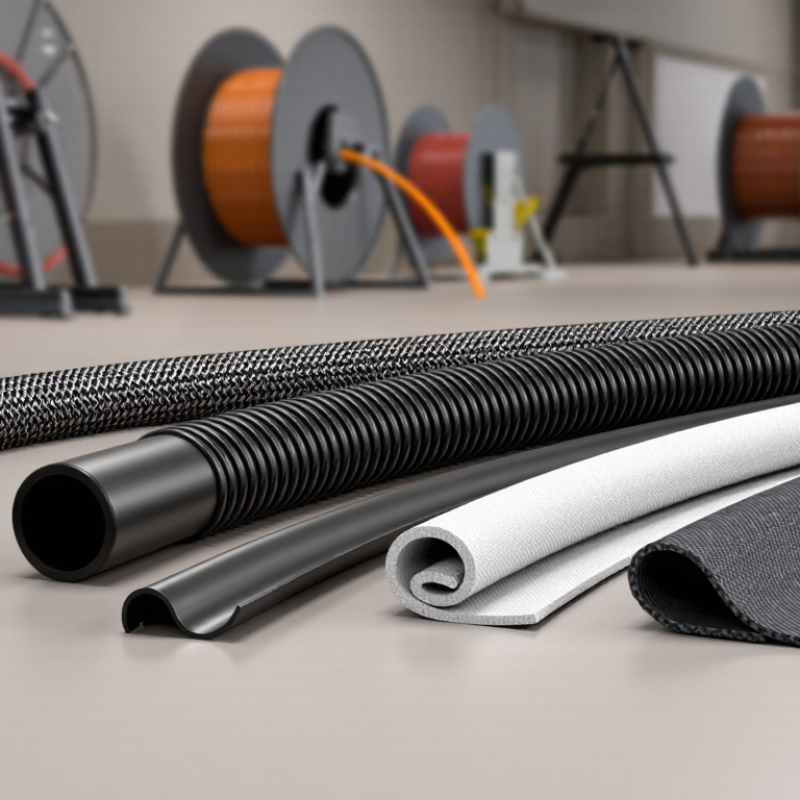
What Cable Protection Sleeves Are and Why Global Buyers Need Them
Cable protection sleeves are flexible covers placed around wires, harnesses, and hoses. They reduce damage from abrasion, heat, moisture, dust, and repeated movement. Common types include expandable braided sleeves, split-wrap sleeves, heat-shrink tubing, and flame-resistant textile sleeves. Each design solves a different site problem.
A 2024 MarketsandMarkets report estimated the global cable management market at about USD 23.9 billion in 2023. It also projected growth to roughly USD 36.2 billion by 2028. Cable sleeves support this wider market by extending cable service life and simplifying maintenance.
In factories, a braided sleeve can prevent rubbing against sharp machine frames. In vehicles, heat-resistant sleeving can protect wiring near engines or exhaust systems. In data centers, organized bundles improve inspection access and airflow. That matters.
Global buyers should check temperature ratings, abrasion cycles, chemical resistance, flame performance, and installation space. IEC 60332 test classifications can help evaluate flame behavior, but compliance needs product-specific evidence.
A 2023 report from Grand View Research identified rising industrial automation and infrastructure investment as major cable management drivers. Still, selecting by price alone creates risk. Some low-cost sleeves loosen, trap moisture, or become difficult to remove during repairs. I have seen specifications look excellent on paper, yet fail when bend radius and actual heat exposure were ignored. Procurement teams should request test reports, material details, batch traceability, and samples under real operating conditions.
How Cable Protection Sleeve Types Differ by Material and Design
2026 Top Cable Protection Sleeve Types for Global Buyers
Cable protection sleeves differ sharply by material, weave, and installation design. Choosing by appearance alone often creates expensive problems.
Expandable polyester sleeves provide flexible abrasion resistance for harnesses, control panels, and moving equipment. Their open weave expands around connectors, then contracts tightly around bundled cables. They are lightweight and allow heat to escape. However, loose ends may fray without proper finishing.
Nylon sleeves usually offer tougher abrasion resistance and a firmer surface. They suit industrial routing where cables rub against brackets or machine frames. Fiberglass sleeves with silicone coatings handle higher heat and occasional contact with hot surfaces. They feel stiffer, though. That detail can complicate tight bends.
Split braided and split corrugated designs improve installation on existing cable runs. Technicians can add them without removing plugs or terminals. Spiral sleeves work well for irregular branches and frequent repositioning. Metal-braided sleeves can support electromagnetic shielding, but they add weight and require careful grounding decisions.
Real purchasing work should begin with the environment. Check temperature range, chemical exposure, UV conditions, bend radius, and flame performance. Request test data and inspect production samples, not only catalog photographs. A sleeve that survives a factory floor may perform poorly outdoors. That mistake is easy to make.
There is no universal best type. Even a strong material can fail when the design is too tight, too loose, or poorly terminated. Small details matter.
Which Sleeve Types Fit Different Industrial Applications
Choosing a cable protection sleeve depends on the working environment, not appearance. Expandable braided sleeves suit control cabinets, robotics, and conveyor systems because they resist abrasion while allowing flexible movement. They can widen around connectors and bundle several cables neatly. Split braided sleeves work better for maintenance areas, where cables already have plugs attached.
High-temperature zones need a different approach. Fiberglass sleeves with silicone coatings can protect wiring near ovens, engines, and welding equipment. For sharp edges or heavy mechanical contact, reinforced conduit sleeves offer stronger resistance. Metal braided sleeves may help reduce electromagnetic interference, but grounding and installation details must be checked carefully. A sleeve alone cannot solve every signal problem.
Tips: Match the sleeve’s temperature range, abrasion rating, flexibility, and chemical resistance with the actual site conditions. Measure the cable bundle at its widest point, then allow room for movement. Do not treat a sleeve as electrical insulation unless the product has been tested for that purpose. In my experience, selecting only by diameter causes trouble; heat and bending are often overlooked. I once specified a tight sleeve for a moving cable chain, and the bundle wore faster than expected. The better choice was slightly looser, with smoother routing and stronger edge protection. Field trials remain valuable because drawings rarely show dust, vibration, or repeated bending accurately.
2026 Top Cable Protection Sleeve Types for Global Buyers
Typical continuous temperature capability by sleeve type and suitable industrial applications.
Braided PET sleeves are commonly selected for abrasion protection in control cabinets, robotics and general cable harnesses. Nylon sleeves provide stronger abrasion resistance for automotive and industrial equipment. Silicone-coated fiberglass sleeves suit high-temperature areas near engines, furnaces and welding equipment. PTFE sleeves are used where very high temperature and chemical resistance are required. Polyolefin heat-shrink tubing is suitable for compact insulation and sealing, while polyethylene spiral wrap is mainly used for flexible bundling and routing. Values shown are typical continuous operating-temperature limits; actual performance depends on construction, wall thickness, installation and the manufacturer’s specification.