7 Best CNC Machining Metal Suppliers for Global Buyers?
Choosing a reliable Cnc Machining Metal supplier is no longer a simple price comparison. Global buyers must examine tolerance control, material traceability, production capacity, inspection systems, and delivery discipline. A polished website proves little. A stamped inspection report proves more.
The global CNC machine market reached approximately USD 83.7 billion in 2023, according to Fortune Business Insights. The report also projects strong growth through 2032. Grand View Research identifies automation, aerospace demand, medical components, and automotive production as important market drivers. These figures show opportunity, but they do not guarantee supplier quality. A growing market can still contain inconsistent workshops. That is the uncomfortable part.
Peter Zelinski, editor-in-chief of Modern Machine Shop, has offered a useful manufacturing principle: “Every part has a process story.” Buyers should remember it. A titanium bracket may require controlled cutting speeds, documented tool changes, and careful deburring. A stainless-steel shaft may need measurable concentricity across several machining stages. Small details often decide whether production succeeds.
This guide evaluates seven Cnc Machining Metal suppliers for international purchasing teams. It considers equipment, certifications, engineering support, inspection capability, communication, minimum order flexibility, and total landed cost. ISO 9001 certification is relevant, but certification alone is not enough. Request sample reports, material certificates, capability data, and realistic lead times. Compare evidence, not promises.
The ranking is practical rather than absolute. Supplier strengths change by alloy, geometry, volume, and destination. One company may excel at rapid prototypes. Another may handle repeat aerospace batches better. Buyers should still conduct independent due diligence before placing production orders. That step is easy to skip. It should not be.
What CNC Machining Metal Suppliers Provide
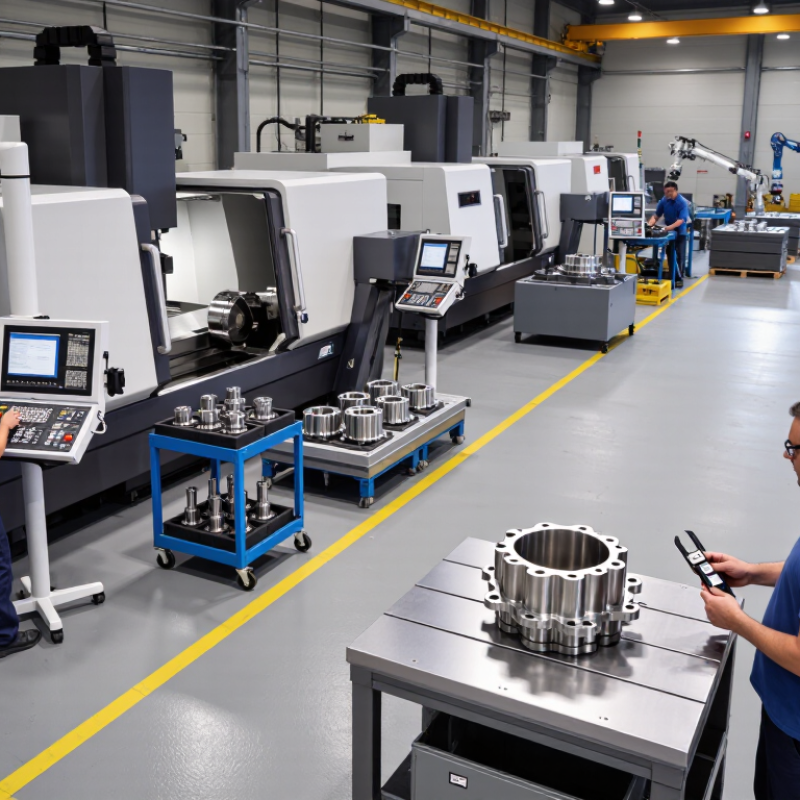
CNC machining metal suppliers should provide more than finished parts. They should provide controlled processes, clear evidence, and practical engineering support. A capable supplier helps select aluminum, stainless steel, brass, titanium, or tool steel for the application. Material certificates should identify the grade, heat number, and testing standard. That small document can prevent a costly production dispute.
Quality control must be visible. Suppliers should explain their machining tolerances, surface-finish options, calibration procedures, and inspection equipment.
Coordinate measuring machines, thread gauges, and roughness testers are useful details, not marketing decoration. The 2023 ISO Survey recorded more than one million ISO 9001 certificates worldwide, showing how widely quality systems are adopted.
Certification alone proves little, however. Buyers should request sample inspection reports and confirm how nonconforming parts are handled.
Global buyers also need dependable communication and logistics. Suppliers should provide design-for-manufacturing feedback, realistic lead times, export packaging, and shipment tracking. The World Bank’s 2023 Logistics Performance Index emphasizes customs, infrastructure, and delivery reliability as major supply-chain factors. These details affect production just as much as cutting accuracy.
I would not choose a supplier only because its quotation is lowest. A cheaper batch may bring burrs, unstable dimensions, or delayed replacements. A perfect supplier file is rare, and even experienced buyers can overlook packaging or revision control. Ask for a pilot order, verify critical dimensions, and keep written approval for every drawing change.
How to Evaluate CNC Machining Metal Suppliers
Choosing a CNC machining metal supplier starts with evidence, not polished photographs. Ask for recent inspection reports, material certificates, and examples of comparable parts. A reliable supplier should explain tolerances, surface finishes, and likely production risks in plain language. Request a video audit or visit when the project is critical. Details matter. Check whether measuring equipment is calibrated and whether operators record deviations.
Review technical capability against your actual design, not a general equipment list. Confirm machine sizes, axis limits, metals handled, prototype capacity, and monthly production volume. Send a controlled drawing with revision numbers and request a first-article inspection report. The report should show dimensions, instruments, results, and acceptance criteria. Do not judge quality from one perfect sample. Ask how the supplier corrected previous defects, because every factory eventually meets a difficult tolerance. That answer reveals experience.
Traceability also protects purchasing decisions. The supplier should identify heat numbers, lot records, subcontracted processes, and packing methods. Compare quotations line by line, including tooling, finishing, inspection, packaging, freight, and lead-time assumptions. A low price may hide weak inspection or unstable scheduling. Test communication with a small paid batch before committing to large volumes. Measure response time, drawing questions, packaging condition, and delivery accuracy. I would leave room for revision; early specifications are often incomplete, and engineers sometimes miss the real production constraint.
Seven Leading CNC Machining Metal Suppliers for Global Buyers
Seven leading CNC machining metal suppliers serve global buyers through different strengths. Supplier One focuses on tight-tolerance aluminum parts for electronics and automation equipment. Its engineers review drawings before production and flag unclear dimensions early. Supplier Two specializes in stainless steel components for food-processing and medical equipment. Material certificates, surface inspection, and controlled cleaning support dependable batch quality. Supplier Three handles rapid prototypes in aluminum, brass, and engineering steel. Short production runs help buyers test fit before ordering larger quantities.
Supplier Four provides medium-volume production with documented process controls. It tracks tool wear, first-article measurements, and inspection results for every batch. Supplier Five works with difficult alloys, including titanium and heat-resistant steel. Machining these metals demands rigid fixtures, suitable cutting tools, and patient parameter adjustments. Supplier Six combines machining with finishing services such as anodizing, passivation, and powder coating. Buyers should confirm color standards and coating thickness before approval. Small details matter.
Supplier Seven supports international procurement with export packaging, digital inspection reports, and flexible delivery planning. Experienced buyers should compare tolerance capability, communication speed, and corrective-action records, not only unit price. A low quote can hide weak inspection or expensive shipping. Ask for sample parts, material traceability, and realistic lead times. Even reliable suppliers may miss an expectation when drawings lack datums, thread details, or surface requirements. That is worth reviewing.
Common CNC Machining Metals for Global Buyers
This chart compares the approximate density of seven metals commonly available from international CNC machining suppliers. Density affects part weight, shipping cost, rigidity, and material selection.
Comparing Materials, Capabilities, Quality, and Delivery
Choosing among the seven best CNC machining metal suppliers requires more than comparing hourly rates. Materials should match the part’s environment. Aluminum suits lightweight housings, stainless steel handles corrosion, and titanium supports demanding strength-to-weight requirements. Review each supplier’s alloy certificates, heat-treatment options, and maximum work envelope. Five-axis machining can reduce setups and alignment errors, but it may cost more. The right capability depends on geometry, tolerance, and annual volume.
Quality systems reveal operational maturity. Ask for inspection plans, calibration records, first-article reports, and measurable tolerance data. ISO 9001 certification helps, but it does not guarantee perfect parts. A supplier using CMM inspection and process-control records offers stronger evidence.
Rockwell Automation’s 2024 State of Smart Manufacturing Report found that 97% of manufacturers have invested, or plan to invest, in smart manufacturing. Digital traceability is becoming practical, not decorative. Still, a clean dashboard cannot fix poor fixture design.
Tips: Request the same drawing package from all seven suppliers. Compare material grade, tolerance, inspection scope, packaging, and delivery terms line by line. Confirm whether quoted lead time includes programming, tooling, finishing, and export preparation. Ask for a sample inspection report before placing a production order. Delivery promises often look precise, yet one missing coating process can add two weeks. I would also test a small pilot batch. It may feel slower, but it exposes communication gaps before they reach a larger shipment.
How to Select the Right Supplier for Your Project
Choosing among seven CNC machining metal suppliers requires more than comparing prices. The right partner must match your material, tolerances, volume, and delivery expectations. Ask for evidence, not polished claims. Request material certificates, inspection reports, and clear details about machining equipment. A supplier producing aerospace-grade aluminum parts may not suit a heavy steel assembly.
Review each supplier’s experience with your metal and part geometry. Share a controlled drawing with tolerances, surface finish, thread details, and expected annual quantity. Then request a sample or first-article inspection. Measure critical features with a coordinate measuring machine when accuracy matters. Check whether the supplier can maintain ±0.02 mm consistently, rather than achieving it once. Small details matter.
Communication is another practical test. Notice how quickly the engineering team identifies unclear dimensions or unrealistic tolerances. Reliable suppliers explain risks before production begins. Confirm lead times, packaging, payment terms, export documents, and approved material substitutions in writing. A low quotation can hide extra inspection fees, tooling charges, or weak packaging. Read the exclusions carefully. Do not trust promises alone.
I have learned that supplier selection is rarely perfect on the first review. A factory may have excellent equipment but slow technical replies. Another may communicate well but lack stable capacity. Keep a comparison sheet, score evidence, and record unresolved questions. Recheck the decision after the sample arrives, because production behavior often reveals more than a sales presentation.