China Best Rapid Prototyping 3D Printing Supplier?
Choosing the right China supplier for rapid prototyping 3d printing requires more than comparing prices. A reliable partner should understand design intent, material behavior, production limits, and delivery pressure. Experienced suppliers can support FDM, SLA, SLS, CNC machining, and low-volume manufacturing. However, process names alone prove little. Real capability appears in sample quality, inspection records, and honest communication.
A strong supplier should review your CAD files before production. They may identify thin walls, sharp corners, weak support areas, or difficult assembly points. Ask about dimensional tolerances, surface finishing, material certificates, and inspection methods. A clear quotation should explain tooling, shipping, revisions, and lead times. Photos of test parts can help, but physical samples provide stronger evidence. This matters when a prototype must fit beside a metal bracket or survive repeated hand testing.
China has many capable manufacturers, but quality varies between workshops. Some suppliers promise every finish and tolerance too easily. That is a warning sign. A better partner admits limitations and suggests practical alternatives. I would also check factory experience, communication speed, quality systems, and customer references. One overlooked detail can delay a product launch. Therefore, this guide examines how to compare China’s best rapid prototyping 3d printing suppliers through technical expertise, production evidence, service reliability, and transparent business practices. The “best” choice may not be the cheapest. It should be the supplier that learns from mistakes and documents each improvement.
What Makes China a Leading Rapid Prototyping 3D Printing Supplier?
China’s rapid prototyping 3D printing strength comes from a dense manufacturing ecosystem. Designers can move from CAD files to printed parts within days. Local access to materials also reduces procurement delays. Engineers commonly support resin, nylon, metal, and engineering-grade thermoplastic projects. That practical experience matters.
Production teams adjust layer height, wall thickness, and support placement for each design. A 0.1-millimeter layer can create cleaner edges, but it may extend printing time. This trade-off affects both cost and testing schedules. Many suppliers also provide design-for-manufacturing feedback before printing begins. They may identify weak bridges, sharp internal corners, or unstable thin walls.
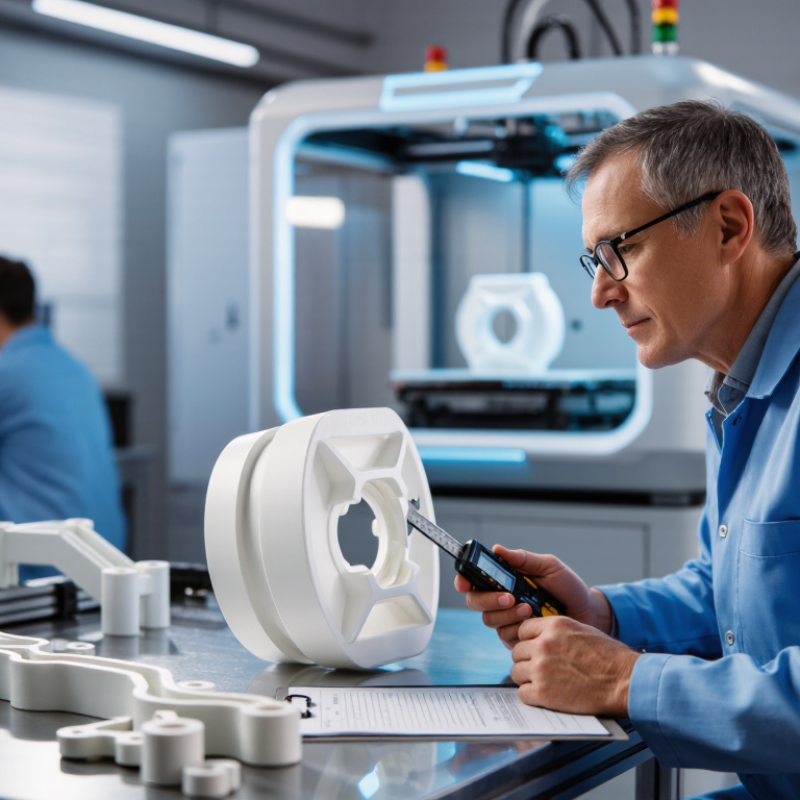
Quality control is another reason China remains competitive. Reliable workshops use calibrated printers, documented inspection steps, and dimensional reports. Some can check prototypes with digital calipers, scanners, or coordinate measuring equipment. Clear communication supports accuracy. Engineers can discuss tolerances, surface finishes, color requirements, and delivery dates in detail. However, no supplier is perfect. A rushed quotation may hide finishing fees or unrealistic tolerances. Buyers should request material data, sample reports, and production photographs before approval. Small pilot orders can reveal consistency better than impressive promises. In my experience, the strongest partnerships grow through repeated feedback, not one successful prototype. Even a minor fit error can teach more than a polished presentation.
How to Evaluate a China-Based 3D Printing Supplier
China Best Rapid Prototyping 3D Printing Supplier?
How to Evaluate a China-Based 3D Printing Supplier
A low quote does not prove production ability. The Wohlers Report 2024 valued the global additive manufacturing market at 20.035 billion US dollars in 2023, with 11.1% annual growth. This expansion increases supplier choices, but quality levels still vary. Request machine specifications, material certificates, layer-height options, and recent inspection records. A capable supplier should explain tolerances clearly, not promise impossible accuracy.
Ask for a controlled sample using your actual geometry. Check thin walls, holes, threads, surface texture, and warping after post-processing. Compare the sample with a measured drawing. Request dimensional reports from calibrated equipment, such as a CMM or optical scanner. ISO/ASTM 52900 provides common additive manufacturing terminology, which helps prevent vague technical discussions. Small detail. Clear language matters.
Review traceability from quotation to shipment. Batch numbers, resin or powder data, operator records, and corrective-action reports show process discipline. Confirm how the supplier protects drawings and handles approved design changes. A written quality agreement is safer than informal chat messages. Also examine export documentation and applicable product regulations for your destination market. I would not judge a factory from one polished sample; that approach is tempting but weak. Ask for a pilot batch, measure variation, and record delivery performance. No audit is perfect. Recheck critical dimensions after finishing, because polishing or machining can quietly change the fit.
How to Evaluate a China-Based 3D Printing Supplier
This weighted scorecard prioritizes the factors most relevant to rapid prototyping procurement: quality and repeatability, technical capability, lead-time reliability, material traceability, communication, and total cost. Buyers can use these dimensions to compare suppliers consistently without relying on brand names alone.
Ordering, Quality Control, and Delivery Considerations
China Best Rapid Prototyping 3D Printing Supplier?
Choosing a rapid prototyping supplier requires more than comparing unit prices. The Wohlers Report 2024 valued the global additive manufacturing industry at $20.035 billion in 2023, with 13.5% annual growth. This expansion increases supplier choices, but also increases quality variation. Request a clear quotation covering material grade, machine type, tolerances, surface finish, tooling, packaging, and shipping terms. Ask for evidence. A capable supplier should explain production limits without hiding behind attractive samples.
Quality control should begin before printing. Review material certificates, machine calibration records, and inspection procedures. For critical parts, require first-article inspection, dimensional reports, and photographs showing support removal or finishing. ISO 9001-based procedures can improve traceability, while ASTM additive manufacturing standards provide useful testing references. Still, paperwork is not proof of perfect production. I would test a small batch before approving a larger order. Small batches reveal gaps.
Delivery is not speed alone. Confirm the production schedule, inspection time, export documents, and transport method in writing. The 2023 State of 3D Printing research from a leading digital manufacturing platform reported that many users value faster product development, yet delays often arise after printing. Customs clearance, rework, and incomplete drawings can quietly extend lead times. Add a realistic buffer. That feels inefficient, but it protects launch dates. Weekly progress photos, tracked shipments, and one accountable contact make problems visible earlier. Mistakes may still occur; the supplier’s response matters more than a flawless promise.