Contact us

How Long Can a Fridge Last Without Power?

A power outage turns a quiet kitchen into a food-safety question: how long can a fridge last without power? An unopened refrigerator usually keeps food cold for about four hours, according to USDA guidance. That window assumes the door stays closed. Every quick glance releases cold air. Every warm room shortens the margin.

Food safety consultant Jeff Nelken often repeats the practical rule, “When in doubt, throw it out.” It sounds simple, perhaps too simple, but it protects against invisible bacterial growth. A refrigerator should remain at 40°F (4°C) or below. After four hours without power, perishable foods require careful evaluation. Meat, seafood, eggs, milk, and leftovers deserve the most suspicion. Smell cannot reliably reveal danger.

This guide will examine how long different foods may survive, how ice and coolers extend safety, and when disposal becomes the wiser choice. A full freezer usually stays frozen for about 48 hours when unopened. A half-full freezer may last closer to 24 hours. These are useful estimates, not promises. Room temperature, appliance condition, and door openings all matter. The four-hour rule is not magical. It is a cautious boundary. If food feels warm, looks questionable, or has sat in uncertainty, discard it. Wasted food is frustrating. Foodborne illness is worse.
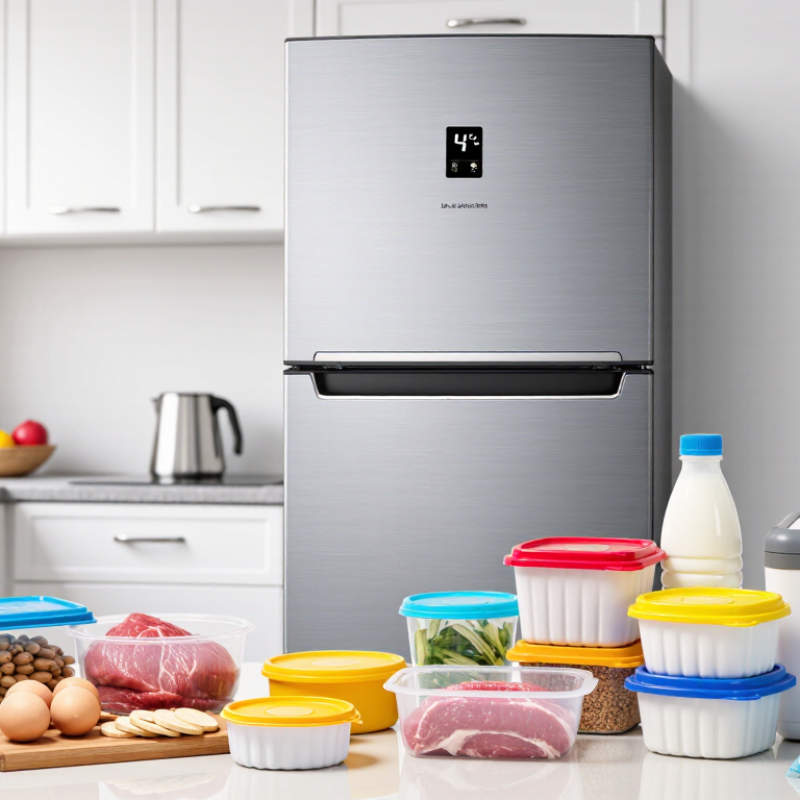
How Long Can a Fridge Last Without Power?

How Long a Fridge Can Keep Food Cold Without Power

When power fails, an unopened refrigerator usually keeps food cold for about four hours, according to USDA Food Safety and Inspection Service guidance. The safe target is 40°F (4°C) or below. This estimate assumes the door stays closed. Each opening releases cold air and allows warm kitchen air inside. A full fridge may warm more slowly than an empty one. Still, cold food can feel safe. That proves little.

The FDA Food Code identifies 41°F (5°C) as a key cold-holding limit for many perishable foods. This small difference matters when a thermometer reads near the boundary. Place a refrigerator thermometer in the center, not inside the door. USDA emergency guidance also reports about 48 hours for a full freezer and 24 hours for a half-full freezer. Those figures do not extend refrigerator safety. Milk, cooked meat, seafood, eggs, and cut produce need extra caution.

After four hours without electricity, check the temperature history if possible. USDA guidance says to discard perishables kept above 40°F for two hours or longer. Never taste food to test its safety. That shortcut is risky. Keep the door closed, move food into an insulated cooler, and add ice. Record when the outage began. A crowded shelf, hot room, or worn door seal can shorten the practical window. Real kitchens are less predictable than the charts.

How Long Can a Fridge Last Without Power?

A closed refrigerator generally keeps food cold and safe for about 4 hours without power. A fully stocked freezer can usually maintain safe temperatures for approximately 48 hours, while a half-full freezer may last about 24 hours. Keep the doors closed as much as possible.

Factors That Affect Refrigerator Temperature and Food Safety

How Long Can a Fridge Last Without Power?

Factors That Affect Refrigerator Temperature and Food Safety

A refrigerator does not warm instantly when power fails. An unopened fridge usually keeps food cold for about four hours. This estimate depends on room temperature, insulation, door seals, and how often the door opens. A full refrigerator stays colder longer because chilled food helps maintain the internal temperature. A nearly empty one warms faster.

Food safety depends on temperature, not only time. Keep perishable food at 40°F (4°C) or below. Meat, eggs, dairy products, and cooked leftovers become risky after staying above that level for too long. If the room is above 90°F (32°C), the safer limit can fall to one hour. Smell and appearance are unreliable tests. Food can look normal and still contain harmful bacteria.

Tips: Keep the door closed. Place a thermometer inside. Move food to an insulated cooler with ice if the outage may continue. Store raw meat separately to prevent leaks. Do not repeatedly check the fridge, even when worried. A crowded fridge is not always safer; blocked air vents can create warm pockets. When uncertain, discard high-risk food. It feels wasteful, but guessing is a poor safety method.

How Long Can a Fridge Last Without Power? - Factors That Affect Refrigerator Temperature and Food Safety
Factor or Situation Typical Time or Temperature Effect on Refrigerator Temperature Food-Safety Guidance
Power outage with the door closed About 4 hours for an unopened refrigerator The insulated cabinet gradually warms, but keeping the door closed slows heat transfer. Keep the door closed and avoid checking the contents repeatedly.
Refrigerator temperature target 40°F (4°C) or below Cold temperatures slow the growth of most foodborne bacteria. Use a refrigerator thermometer to verify the actual internal temperature.
Perishable food above 40°F (4°C) No more than 2 hours Bacteria can multiply rapidly in the temperature danger zone between 40°F and 140°F (4°C and 60°C). Discard perishable food that has been above 40°F for more than 2 hours.
Very hot surrounding conditions Above 90°F (32°C): no more than 1 hour High room temperatures can make the refrigerator warm faster during an outage. Discard perishable food exposed above 40°F for more than 1 hour in these conditions.
Freezer, fully stocked Approximately 48 hours if unopened A full freezer contains more frozen mass and retains cold longer than a partially filled freezer. Food may generally be refrozen if it still contains ice crystals or remains at 40°F (4°C) or below.
Freezer, half full Approximately 24 hours if unopened Less frozen food means less stored cold energy and faster warming. Check food temperature and condition before refreezing or cooking.
Door opening frequency Every opening allows warm air inside Repeated or prolonged opening can reduce the safe holding time considerably. Open the refrigerator only when necessary and close the door promptly.
Amount of food inside Full or tightly packed: usually retains cold better Cold food acts as thermal mass, while an empty cabinet warms more quickly. Do not pack food so tightly that cold air cannot circulate when power returns.
Food placement Perishables should be kept in the coldest suitable areas The door and front shelves usually experience greater temperature changes than interior shelves. Store meat, poultry, seafood, eggs, and dairy in the main compartment rather than the door.
Food requiring extra caution Meat, poultry, seafood, eggs, milk, soft cheese, cooked leftovers, and cut produce These foods generally support bacterial growth when held too warm for too long. When in doubt, throw it out; smell and appearance cannot reliably confirm safety.
Food that is usually more stable Whole, uncut fruits and vegetables; hard cheeses; butter; unopened shelf-stable foods Lower moisture, acidity, or protective packaging can slow spoilage compared with high-risk perishables. Assess each item individually and follow package instructions after power is restored.
After power returns Check the temperature before relying on the food The appliance may need time to return to 40°F (4°C) or below. Use a thermometer and discard questionable perishables rather than tasting them for safety.
Key rule: An unopened refrigerator generally keeps food cold for about 4 hours without power. The actual time varies with room temperature, insulation, food volume, appliance condition, and door openings. When food safety is uncertain, discard the food instead of tasting it.

What Happens Inside a Fridge During a Power Outage

When electricity stops, the compressor shuts down, and the quiet kitchen can feel misleading. The cold air does not vanish immediately. Stored food, shelves, and cabinet walls retain some thermal energy. A full refrigerator usually stays cold longer than a nearly empty one. Every door opening releases chilled air and pulls warmer room air inside. That small habit matters.

As the temperature rises, bacteria can multiply without changing the food’s smell or appearance. A food-safe refrigerator should remain at 40°F (4°C) or below. An unopened unit may keep food cold for about four hours, but room temperature and insulation affect that estimate. An appliance thermometer gives better evidence than touching a carton. I once assumed cold leftovers were still safe after a long outage. That was a poor test. Smell cannot prove safety.

Keep the door closed and move essential foods into an insulated cooler if the outage continues. Ice packs can slow warming, but they do not make unsafe food safe again. A full freezer can often hold its temperature for about 48 hours, while a half-full freezer may last around 24 hours. Food near the freezer’s center usually stays colder than items beside the door. When power returns, check the thermometer before restocking. Discard perishable food that has remained above 40°F for too long, even if it looks normal. Temperature records are imperfect, but they are more reliable than guesswork.

How to Check Whether Refrigerated Food Is Still Safe

How Long Can a Fridge Last Without Power?

When the electricity fails, keep the refrigerator door closed. A closed fridge usually keeps food cold for about four hours. After that, safety becomes uncertain. Use a refrigerator thermometer if one is available. Food should remain at 4°C (40°F) or below. A full freezer can stay frozen for roughly 48 hours, while a half-full freezer may last about 24 hours.

Check the temperature before inspecting individual foods. Discard meat, seafood, eggs, milk, cooked rice, and leftovers kept above 4°C for more than two hours. If the room is hotter than 32°C (90°F), use one hour as the limit. Do not taste food to test it. Harmful bacteria may grow without changing its smell, color, or texture. That familiar sour smell is not a reliable safety test.

Look for ice crystals in frozen food, but remember that appearance alone cannot prove safety. If food still contains hard ice crystals, it may be safely refrozen, although quality can suffer. Keep questionable items separate from other food. Clean leaking packages with hot, soapy water. I once trusted a cool container and nearly kept it; that was a poor judgment. When timing is unclear, throwing food away is the safer choice. A small thermometer and a written outage time can prevent guesswork during the next failure.

Ways to Keep a Fridge Cold During an Extended Outage

A refrigerator usually stays cold for about four hours without power, according to USDA Food Safety and Inspection Service guidance. Keeping the door closed matters most. Every opening releases a pocket of cold air.

Move vulnerable foods into an insulated cooler with plenty of ice or frozen gel packs. Place a refrigerator thermometer inside. The FDA recommends keeping refrigerated food at 40°F (4°C) or below. A full freezer can hold a safe temperature for about 48 hours, while a half-full freezer lasts roughly 24 hours, according to USDA emergency guidance. Group frozen items together. They protect each other.

Dry ice can extend cooling, but it needs careful handling and ventilation. Never touch it with bare hands. Never store it in a sealed container. Raw meat should stay below ready-to-eat food, preferably in leakproof containers. A shallow tray can catch melting ice and meat juices.

Do not keep checking.

If food has been above 40°F for more than two hours, discard it, advises the USDA. The limit drops to one hour when outdoor temperatures exceed 90°F. Do not taste food to judge safety. Odor and appearance can seem normal while bacteria multiply. I have found that people often save condiments first, although meat, dairy, and cut produce need attention sooner. That instinct deserves reconsideration. Sources: USDA FSIS, “Keeping Food Safe During an Emergency”; U.S. Food and Drug Administration, Food Code 2022.